Louisiana License Plate
Plate Designs
Pelican (Current)
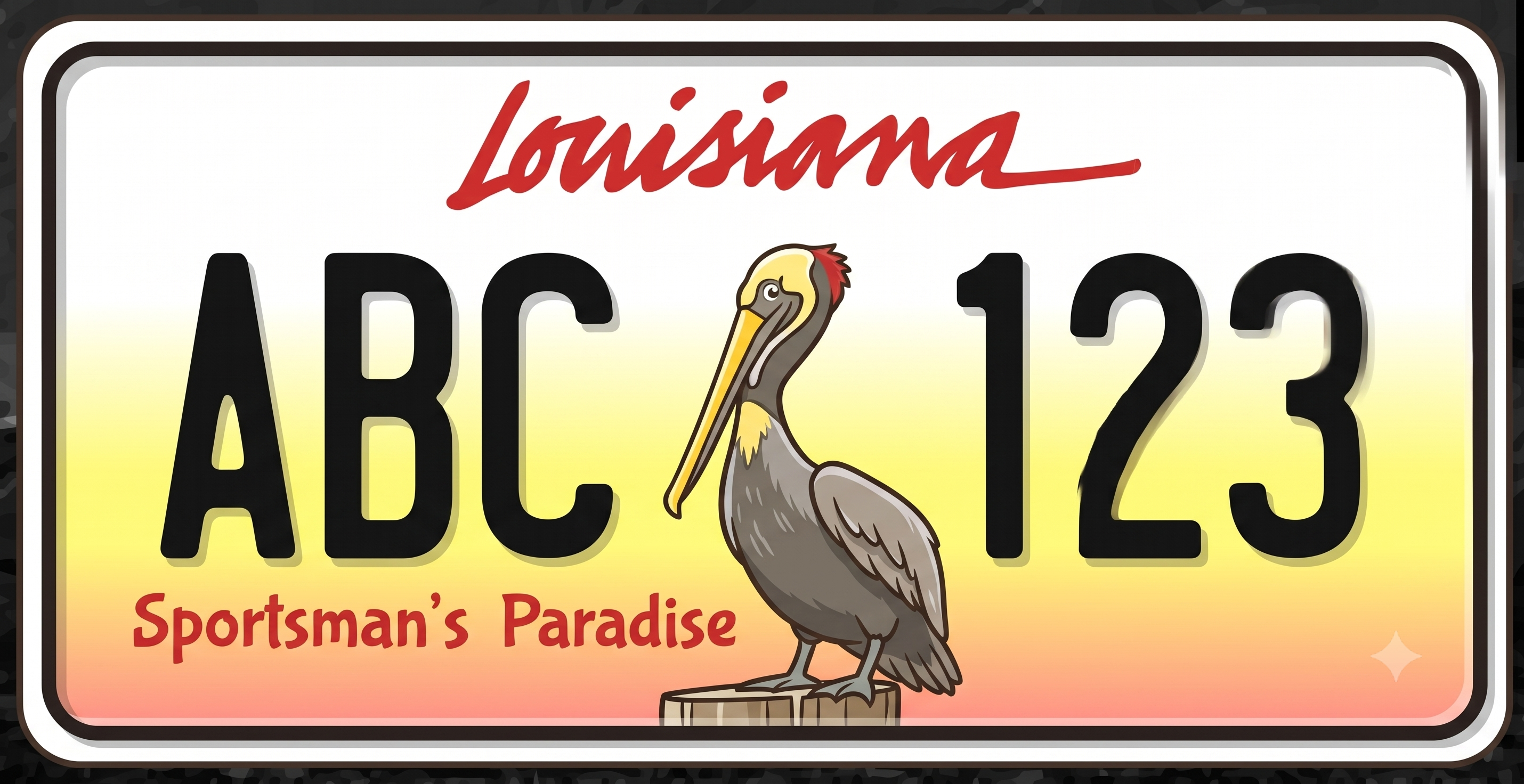
This is one of the most recognizable plates in the South, and for good reason. The background washes through a vivid sunset gradient — bright white at the top bleeding into golden yellow and finishing in a warm orange-pink at the bottom — giving the plate a warmth that stands out immediately in a parking lot. "Louisiana" runs across the top in bold red cursive script, the kind of hand-lettered style that signals southern character. The centerpiece is a fully illustrated brown pelican standing on a wooden stump, rendered with surprising detail: a mottled gray-brown body, a long yellow-orange bill, and a distinctive red crest. The plate numbers are set in large, heavy black characters on either side of the bird. "Sportsman's Paradise" — Louisiana's state slogan — is written in matching red along the lower left. The brown pelican is Louisiana's state bird, and this plate makes sure you know it.
Classic White (Current)
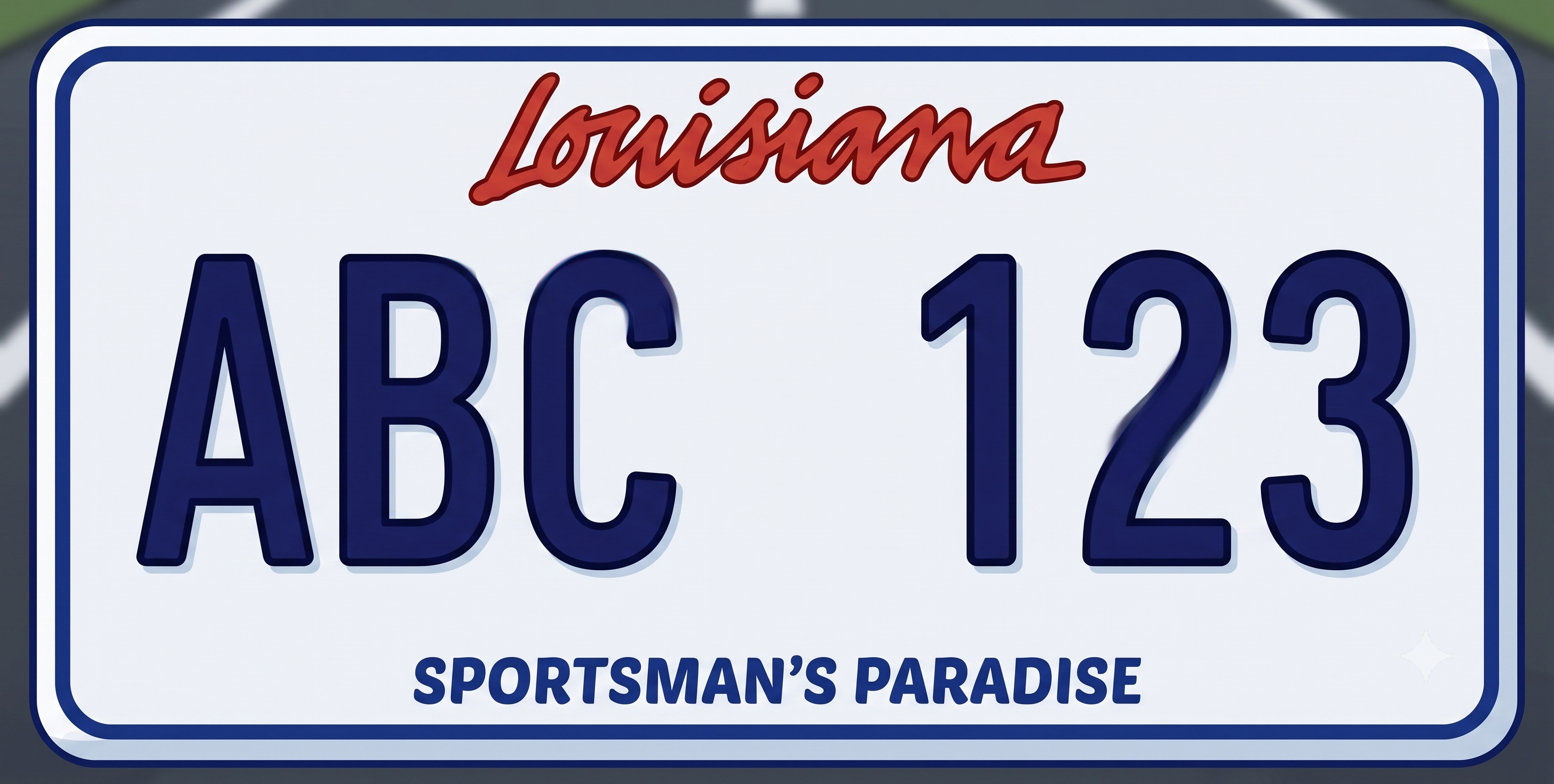
The classic white design strips away the sunset gradient and pelican illustration for a clean, no-frills look. The background is a cool white with a slight gray cast, framed by a dark navy border that gives it a tidy, official feel. "Louisiana" still appears at the top in the same red cursive script, keeping the personality of the state name intact. But here the plate numbers are rendered in large, rounded dark navy bold characters — a softer, almost friendly weight compared to the stark black on the pelican version. Along the bottom, "SPORTSMAN'S PARADISE" is set in all-caps dark navy, centered and understated. No imagery, no gradient — just the essentials. This version reads as more conservative and is the quieter sibling to the eye-catching pelican plate.
How Rare Is It on the Road Trip Game?
Uncommon. Louisiana sits around 25th in US population with roughly 4.6 million residents — a solid mid-sized state, but its geography keeps plates concentrated in the Gulf South. I-10 cuts straight across the state from Texas to Mississippi, which does move Louisiana plates into neighboring states regularly, but outside of the South and Gulf Coast corridor, spotting an LA plate requires real patience.
Spotting Tip
Interstate 10 is your best corridor — it runs the full width of Louisiana from the Texas border through Baton Rouge and New Orleans, then onward to Mississippi, and Louisiana plates circulate heavily along this route and through the Florida Panhandle. I-20 from Shreveport east toward Mississippi also generates good exposure in the northern part of the state. If you're anywhere near New Orleans — especially during Mardi Gras season in late winter or Jazz Fest in late April and early May — the highways fill with both inbound Louisiana-plated cars and residents heading home, making it an excellent time to spot both the pelican and classic white versions on the same trip.
Fun Fact
Louisiana is the only US state that does not have counties — it has parishes, a holdover from its French and Spanish colonial history when the Catholic Church organized civil life around church parishes. The brown pelican on the standard plate nearly went extinct in Louisiana during the 1960s due to widespread pesticide use, and was removed from the state entirely by 1966. A long recovery and reintroduction effort brought it back, and it was officially removed from the federal endangered species list in 2009 — making its appearance on the state plate a genuine comeback story.
Ready to keep hunting? Head back to the game to check LA off your list, or browse all 50 states in the guide.